
Concrete Spall and Slab Repair for NYC Parking Garages
In a garage, spalled concrete falls on cars and on the people walking between them. We find how far the damage really runs, cut it out to sound concrete, clean or reinforce the rusted steel inside and rebuild the slab, on the driving surface and on the ceiling above the parking spaces.
What Is Concrete Spalling in a Parking Garage?
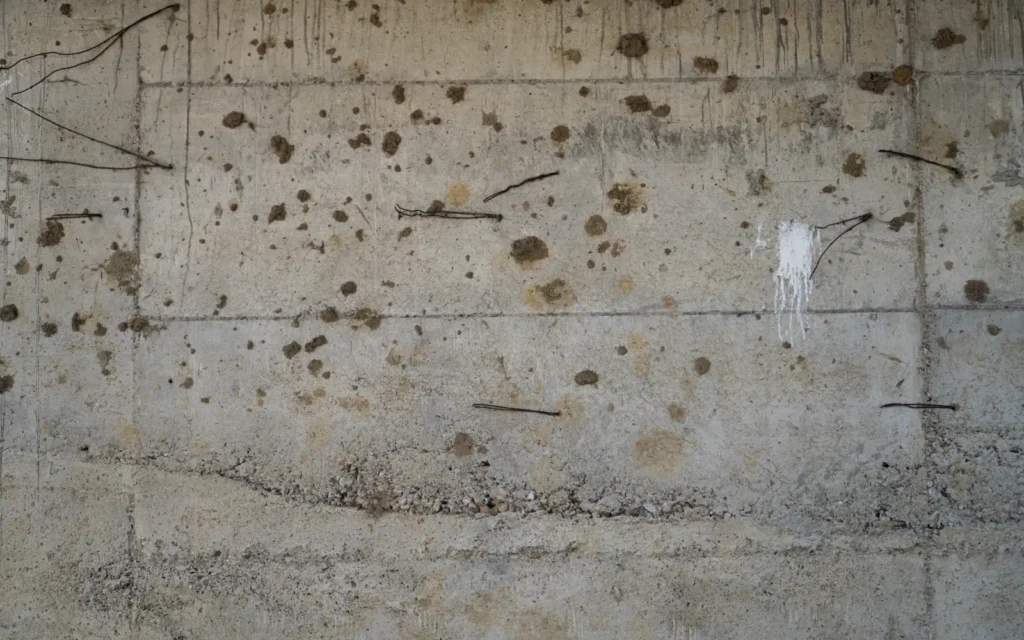
Concrete spalling is when pieces of the surface break away, usually because the steel bar inside has rusted and pushed the cover off. In a garage it shows up in two places: on top of the deck, where tires turn small breaks into potholes, and on the underside of the deck above, where loose pieces can drop onto parked cars.
Before a spall falls, the concrete often separates in a hidden layer called a delamination. It looks normal but sounds hollow when tapped with a hammer or dragged with a chain. That is why the visible hole is only part of the job: the repair has to reach every hollow area around it and the rusted steel underneath, or the edges keep breaking away.
“The hole you can see is rarely the whole repair.”
Spall, Delamination, Scaling or Crack: How to Tell Them Apart
Each kind of damage looks different and needs a different fix.
| What You Find | What It Usually Means and Needs |
|---|---|
|
Spall with rusty bar showing |
The steel is corroding and has broken the cover. It needs removal to sound concrete and treatment of the bar. |
|
Hollow sound, surface still intact |
A delamination. It will become a spall, so it is cut out and repaired the same way before it lets go. |
|
Thin flaking on the top surface, no steel visible |
Scaling from salt and freeze-thaw. It usually needs a surface repair and a membrane, not a deep patch. |
|
Rust stain or a rust-colored crack |
Steel corroding below a still-solid surface. It is the early warning, worth sounding and marking now. |
|
Pothole in the driving surface |
A spall that traffic has widened. It may run deep enough to need full-depth slab work. |
|
Hairline crack with no stain |
Often shrinkage and not structural. It is sealed so water and salt stay out. |
How We Repair a Concrete Spall, Step by Step
Our method follows the industry guideline for corrosion-damaged concrete, ICRI 310.1R.
Sound and Mark
We tap or chain-drag the area around the visible damage to find every hollow spot. The repair outline is drawn as a simple square or rectangle that takes in all of it.
Saw-Cut and Remove
The outline is saw-cut at least 1/2 inch deep, so the patch has square edges instead of thin feathered ones. Damaged concrete is chipped out, and where a bar is half exposed or rusted, we clear at least 3/4 inch behind it and follow it until the steel is clean.
Treat the Steel
The bar is blast-cleaned and checked for lost thickness. Where the engineer finds too much section loss, new bar is added alongside, and in salty areas galvanic anodes are tied to the steel at the patch edge.
Rebuild and Cure
The cavity is roughened and dampened, then filled with repair mortar or with formed and poured concrete for deep repairs. After curing, we sound the patch again to confirm it is fully bonded.
Spall and Slab Repairs We Handle in NYC Garages
The depth of the damage and where it sits decide which repair fits.
Topside Deck Patches
Partial-depth repairs on the driving surface, finished flush so tires and plows pass over without catching an edge.
Ceiling and Soffit Repairs
Overhead repairs on the underside of the deck, built up with non-sag mortar or formed and pumped when they run deep.
Full-Depth Slab Replacement
Where damage goes through the slab, the section is cut out and recast, with temporary support where the engineer requires it.
Joint Edges and Nosings
The concrete edges on each side of an expansion joint take a hit from every axle. Broken edges are rebuilt before the new joint goes in.
Curbs, Ramps and Stair Landings
Spalled curbs, ramp surfaces and stair landings are repaired with the same method, so they hold up under foot and wheel traffic.
Crack Sealing Before It Spalls
Cracks without hollow concrete around them are routed and sealed, so salt water stops reaching the steel before it rusts.
Repairing Spalls on the Garage Ceiling
Overhead repairs follow the same method, but three things change when the damage is above the cars.
Gravity Works Against the Patch
Overhead mortar is placed in thin layers that will not sag. Thick or wide repairs are formed and filled from below so the material stays in place.
Cars Below Are Protected
The spaces under the work are closed, and debris is caught before it reaches the floor or any vehicle nearby.
The Leak Above Gets Fixed Too
Ceiling spalls often start with water coming through a crack or joint on the deck above. We trace it, so the new patch does not get the same water.
Falling Concrete Can't Wait for the Next Report
NYC Administrative Code §28-301.1 makes the owner responsible for keeping the building safe at all times, not only in an inspection year. If a piece has dropped or is hanging loose, close the spaces below, have the loose concrete taken down or netted, and call your QPSI so the condition is recorded. The same section requires anyone working on a building who believes it is unsafe to report it to DOB in writing, so our crews do not walk past a hazard. Where a spall shows heavy rust on the main bars of a beam or slab, the engineer may call for temporary shoring before any concrete is removed.
What a Spall Repair Day Looks Like
Small Repairs Finished in One Shift
Isolated patches are cut, filled and closed in a single shift with rapid-setting mortar, so the space is back in use quickly.
Debris Gone the Same Day
Chipped concrete is bagged and hauled out before the crew leaves, so no piles sit in drive aisles overnight.
Every Patch Sounded Before Reopening
Once cured, each repair is tapped again. Any hollow spot is cut out and redone before the area reopens.
What Affects the Cost of Spall and Slab Repair
Spall repair is usually priced by area and depth, and these six things move that price.
Repair Size and Depth
A shallow topside patch and a full-depth slab section are different jobs, priced by area and depth.
Overhead or Topside
Ceiling work is slower than deck work, because the material goes on in layers and the area below must be protected.
Condition of the Steel
Bars that only need cleaning cost little extra. Bars with heavy section loss need new steel added.
Anodes and Coatings
Galvanic anodes and steel coatings add to each patch but help stop new rust starting at its edges.
Height and Reach
High ceilings, tight headroom on ramps and areas a lift cannot reach add setup time.
Many Small Spots or a Few Large Ones
Dozens of scattered patches cost more per square foot than the same area in a few large repairs.
Concrete Spall Repair FAQs
It can be. A spall on the ceiling can drop onto cars or people, and a spall on the deck can trip pedestrians or damage tires. Loose overhead concrete should be taken down or netted as soon as it is found.
Not for long. A thin patch spread over rusty steel and feathered edges tends to break loose again, often within a short time. The damaged concrete has to come out, and the steel has to be cleaned before new material goes in.
The steel just outside a patch can start corroding faster once the patch is placed, which is often called the halo effect. Galvanic anodes tied to the steel at the patch edge are one way to slow this down.
It depends on the material. Rapid-setting mortars can take light traffic within hours, while standard repair concrete needs longer to cure. We follow the manufacturer's cure times before reopening a space.
A partial-depth repair removes damaged concrete down to and around the steel but leaves the bottom of the slab in place. A full-depth repair cuts through the whole slab and recasts it, which is needed when the damage goes all the way through.
Usually not exactly, because new concrete and repair mortar start lighter. A membrane or coating over the deck evens out the look, and what matters most is that the patch is sound and bonded.
Isolated spalls can. Where they cluster in one area, repairing the whole area together usually costs less than returning for each new spot.