
Garage Structural Repair and Emergency Shoring in NYC
When a beam, column, slab or tendon can no longer be trusted to carry its load, the first job is to hold it up and the second is to fix it for good. We install engineer-designed shoring as soon as the area is closed off, then repair or strengthen the damaged framing so the shores can come out.
When Does Garage Damage Become a Structural Problem?
Garage damage turns structural when it reduces what a member can carry: steel that has lost thickness, concrete that no longer confines the bars, a tendon that has broken, or a connection that is losing its bearing. Surface spalls can usually be patched while the garage runs normally. Structural damage needs an engineer to judge the capacity left and decide whether the member has to be supported first.
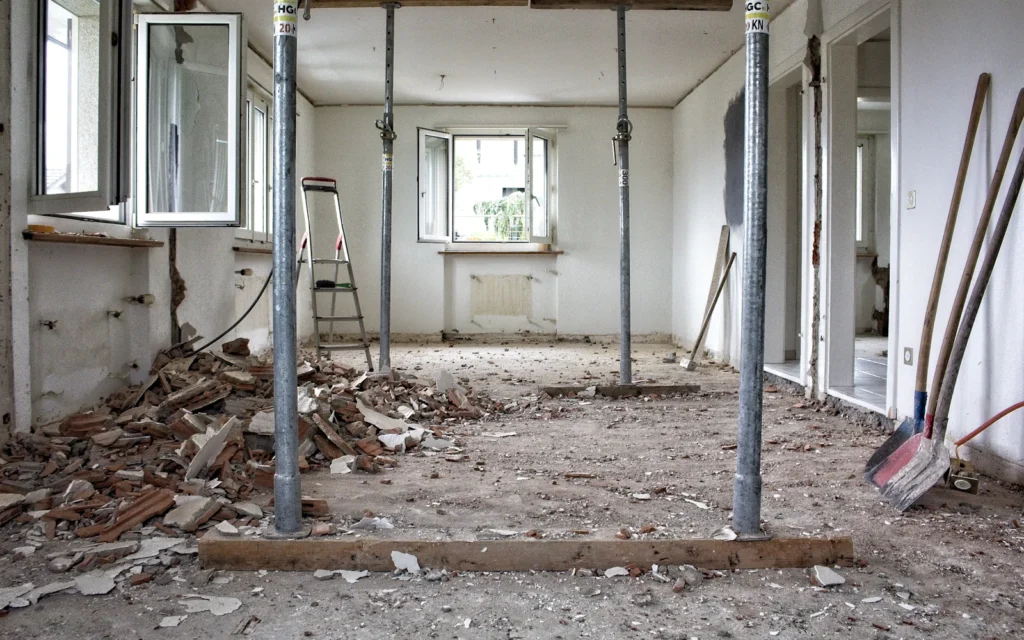
Shoring is that support. Steel posts or towers take the load off the damaged member and pass it down to a level that can carry it, so cars can move away safely and the repair can be done without risk of collapse. The shores stay until the repaired or strengthened member is ready to carry its share again.
“Shoring buys time. The repair is what ends the risk.”
Structural Warning Signs in Beams, Columns and Slabs
None of these is a diagnosis on its own, but each one is a reason to call an engineer before parking under it again.
| Warning Sign | What It Can Mean and What Comes Next |
|---|---|
|
Diagonal cracks near the ends of a beam |
Possible shear distress. The engineer checks the beam, and the area below may be closed and shored until it is repaired. |
|
Rust-stained crack or bare bars along the bottom of a beam |
The main bars may have lost section. The loss is measured, then new steel or strengthening is added. |
|
Spalling at a column base with ties or bars showing |
The column may have lost confinement. Beams around it are often shored while the column is rebuilt or jacketed. |
|
Sag or new ponding in a slab that used to drain |
The slab may be losing capacity or carrying more than it should. It is shored and investigated before use. |
|
Bulging or broken tendon end at the slab edge |
A post-tensioning tendon may have failed. The area is closed and a tendon specialist assesses it. |
|
Cracked or crushed bearing at a precast beam seat |
The connection may be losing support. The member is shored and the bearing rebuilt. |
Emergency Shoring, From the First Call to Removal
Every shoring job follows the same four stages, whether it starts with a QPSI’s call or a crack someone spotted.
Close the Area
Cars are moved out from under and around the damaged member, and the zone is barricaded. Nobody parks or walks there until it is supported.
Design the Support
A licensed engineer works out the load and where it has to go. Shores often have to continue down through the levels below until they reach a slab or foundation strong enough to take it.
Install and Check
Shores are set plumb, tightened against the member and checked by the engineer. The Emergency Work Notification goes to DOB within two business days of the work being finished.
Repair, Then Remove
The permanent repair is designed, filed and built. Shores come out only after the engineer confirms the repaired member can carry its load again.
Structural Repair and Strengthening Methods for Garage Framing
The engineer picks the method from the capacity that is missing and the space around the member.
Supplemental Reinforcing Steel
New bars are spliced in next to bars that lost too much section, then the member is recast around them.
Column and Beam Jacketing
A new layer of reinforced concrete is cast around the old member to restore or add strength and confinement.
FRP Wraps and Laminates
Carbon fiber sheets or strips are bonded to the concrete to add strength, once salty concrete is replaced and only where the original member can still carry a minimum load on its own.
Steel Supports and Brackets
New steel beams, plates or brackets take load from a weak member where adding concrete is not practical.
Post-Tensioned Tendon Repair
Broken or corroded tendons are exposed, spliced or replaced and stressed again by a post-tensioning specialist.
Precast Connection Repair
Corroded weld plates, worn bearing pads and cracked corbels in precast garages are rebuilt so the tees stay seated.
Types of Temporary Shoring in Parking Garages
The load, the ceiling height and the traffic around the damage decide which support goes in.
Adjustable Steel Post Shores
Screw-adjusted posts under a header beam, quick to set and suited to most single beams and slab areas.
Shoring Towers
Braced frame towers for heavy loads or tall clear heights, where single posts would not be stable enough.
Spreader Beams and Cribbing
Beams and timber cribbing spread the load over a wider area of the slab below, or work under low headroom.
Emergency Shoring and DOB: What the Code Allows
NYC Administrative Code §28-105.4.1 lets emergency work start before a permit is issued when it relieves a dangerous condition, and DOB lists stabilizing unsafe structural conditions as an example. The catch is paperwork: an Emergency Work Notification describing the emergency and what was done must reach DOB within two business days after the work is completed. The permanent repair is different. It is designed by a registered design professional and filed with DOB before work starts, so the shores stay in place while that filing goes through.
Keeping a Shored Garage Working
Shores Placed Around Traffic
Where the engineer’s layout allows, shores are lined up along parking rows so the drive aisle stays clear.
Guarded Against Bumps
Each line of shores gets barriers, reflective markings and lighting, so a reversing car cannot knock one loose.
Checked Until They Come Out
Shores are checked for tightness on a set schedule and after any impact, and reset if anything has moved.
What Affects the Cost of Shoring and Structural Repair
Structural work is priced job by job. These six things weigh on it most.
Emergency or Planned
A night or weekend call-out costs more than shoring scheduled a week ahead.
How Long Shores Stay
Shores are often rented, so months of waiting for design and permits add up.
Levels the Load Passes Through
Shores that run down through two or three levels mean more equipment and labor than one level.
Repair or Strengthening Method
Splicing bars, jacketing, FRP and new steel differ in cost, cure time and how long the area stays closed.
Engineering and Inspections
Design, DOB filing, testing and special inspections are part of every permanent structural repair.
Headroom and Access
Low ceilings, ramps and tight bays slow the setup of shores and the movement of material.
Structural Repair and Shoring FAQs
Diagonal cracks near the ends of a beam, wide cracks along its underside, rust stains or any crack that keeps growing deserve an engineer's look. Hairline cracks that stay the same width are usually less urgent, but only an engineer can say for sure.
They are moved out right away, and the area under and around the member is closed until it is shored. Owners are asked to move them, or the operator moves them where the garage is attended.
A licensed professional engineer decides the load, the shore layout and how far down the support has to go. Our crew installs it to that design and resets it if anything moves.
Sometimes, but nobody should assume it. It depends on how much steel has been lost and where. The engineer measures the remaining section and decides whether the beam needs shoring before anything else happens.
It can be, under the right conditions. Salty concrete has to be replaced first, the original beam must still carry a minimum load without the FRP, and fire protection may be needed in enclosed areas.
As long as the repair needs, which can be several months when design and permits take time. They are checked regularly the whole time, and the cost rises the longer they stay.
The damage is different. Precast garages depend on connections and bearings between the tees and beams, so the work often centers on corroded weld plates, bearing pads and corbels rather than long runs of slab.